Wednesday, April 29, 2009

People Try Twitter One Month


It's good to know I am not alone: Many other people use Twitter a few times and can't think of a good reason to come back. With all the hype about Twitter's 140-character version of living, I'd gotten the impression that I'm the only one on Twitter who doesn't get why Twitter matters.

Twitter needs to be concerned about this, especially since both MySpace and Facebook have failure to return rates only about half that of Twitter. Put another way, 60 percent of MySpace and Facebook users come back the next month, about the same percentage that do not return to Twitter on its best months.

Both MySpace and Facebook, for all their problems, offer more services than Twitter. It is easy to see how places where users can do more things could make the two services "stickier" than Twitter.

This does not surprise me. Twitter feels really light to me. Some people, obviously, become addicted but large numbers of others just walk away. That is not such a big deal right now as Twitter is in major growth mode. Growth hides all manner of sins.

However, if that growth mostly results in new users sampling and leaving, the growth will not last. Worse, it may be hard to get those unhappy users to return should Twitter ever expand its product features.

Today, it would be much easier for TweetDeck to make money off my use of Twitter than it would be for Twitter itself. Again, I do not see how these social networks ever make the big money that investors are betting they will.


Read rest of entry

Google has inquiries by the Department of Justice this week


Google is being hit with its first (of many?) anti-Monopoly inquiries by the Department of Justice this week the NYTimes has learned. The concern is over the $125 million settlement that Google came to with the Author's Guild and the Association of American publishers. A class action suit was filed in 2005 and claims that Google's practice of scanning copyrighted books from libraries for use in its book search service was a violation of copyrights. The October settlement gave Google the right to display the books online as well as profit from selling access to individual tax and subscriptions to its entire collection to libraries. This revenue would be shared with authors and publishers. Judge Denny Chin of Federal District Court in New York, who is overseeing a settlement, postponed the deadline for authors by four months to opt out of the settlement and for other parties to file briefs. Authors had complained that they needed more time to review the settlement. Google, of course, had defended the settlement saying he would bring revenue to authors and publishers. They also contend that it will give the public access to millions of out-of-print books. Google was trying to be the iTunes of books.


Read rest of entry

Apple Updates iPhone 3.0 Beta Software


Updated iPhone 3.0 beta software shipped to developers late Tuesday and included in the code was a pre-release of the next version of iTunes (8.2). Clues buried in the new iTunes pre-release software suggest that Apple's media player will support Blu-ray disc playback.

Not much else was remarkable about the iPhone 3.0 update, but the additional iTunes 8.2 support for Blu-ray was a surprise. Proof of Blu-ray support can be found in the About iTunes help window in the pre-release version of iTunes 8.2. A copyright notice now includes a mention of Blu-ray media, hinting that the final release will likely play high-def discs. This could also mean that Apple plans to introduce Blu-ray drives into its computer lineup, although the company has previously dismissed this technology.

In the past, Steve Jobs has called Blu-ray a "bag of hurt" when referring to its licensing terms. While Apple hasn't yet formally announced any Blu-ray hardware, one could speculate that at the company's annual Worldwide Developers Conference (WWDC) in June, some sort of high-def hardware announcement could be made as well.


Read rest of entry

HP Launched A New Low-Cost Business Laptops


HP launched a new line of low-cost business notebooks called the ProBook s-series that merge business functionality with consumer goodies like HD graphics and Blu-ray drives. The HP ProBooks give you a choice of an Intel or AMD processor across most of the line, as well as choices of 14-, 15.6-, or 17.3-inch diagonal HD widescreens with a 16:9 aspect ratio.


Models come in glossy noir (black) or merlot, though merlot is only available on the 14- and 15-inch models and is not expected to be available until June.


Most of the ProBooks share similar features, including:


-800 MHz DDR2 SDRAM two slots expandable up to 8GB
-Up to 500GB SATA HDD internal storage
-Wi-Fi a/b/g/n
-ExpressCard/34 slot

-Media Card Reader
-Ports: four USB 2.0, VGA and HDMI
-Full-size keyboard

-Options include: Blu-ray ROM DVD+/-RW SuperMulti DL LightScribe Drive5; 2 MP webcam; and Bluetooth 2.0

Here's the breakdown for specific models:

4410s (Intel) and 4415s (AMD)
-14-inch diagonal widescreen with 16:9 ratio
-ATI Radeon HD 3200 integrated graphics, ATI Mobility RadeonTM HD 4330 discrete graphics, with 512 MB dedicated video memory
-6-cell Lithium-Ion battery
-Weight: 5 pounds with optical drive
-Dimensions: 1.22 (at front) x 13.2 x 9.15 in

4510s (Intel) and 4515s (AMD)
-15.5-inch diagonal widescreen with 16:9 ratio
-integrated number pad
--HP un2400 EV-DO/HSPA Mobile Broadband Module that HP says will work with multiple mobile broadband carriers
-Mobile Intel GMA 4500MHD, ATI Mobility RadeonTM HD 4330, with 512 MB dedicated video memory (4510s)

- ATI Radeon HD 3200 integrated graphics, ATI Mobility RadeonTM HD 4330 discrete graphics, with 512 MB dedicated video memory (4515s)
-8-or 6-cell Lithium-Ion battery
-Weight: 5.7 pounds including optical drive
-Dimensions: 1.24 (at front) x 14.6 x 9.83 in

4710s (Intel only)
-17.3-inch diagonal widescreen with 16:9 ratio
-ATI Mobility RadeonTM HD 4330, with 512 MB dedicated video memory
-8-cell Lithium-Ion battery
-Weight: 6.8 pounds with optical drive
-Dimensions: 1.26 (at front) x 16.17 x 10.63 in

All HP ProBooks come with HP Smart AC adapters that allow the notebooks to automatically make power adjustments as needed. The ProBook models are mercury-free, have an Electronic Products Environmental Assessment Tool silver rating, and are ENERGY STAR qualified. The ProBook models are also compatible with HP's USB 2.0 docking station.


Read rest of entry

New Apple Gizmos Coming


For those who switched to AT&T from Verizon in anticipation of the iPhone, now may be the time to switch back. According to two anonymous sources speaking to Business Week, Apple and Verizon may release two new Verizon-exclusive iPhone-like products as early as this summer. The rumors go hand-in-hand with recent talk that the iPhone is coming to Verizon, and that Apple has new devices up its sleeve for the summer.

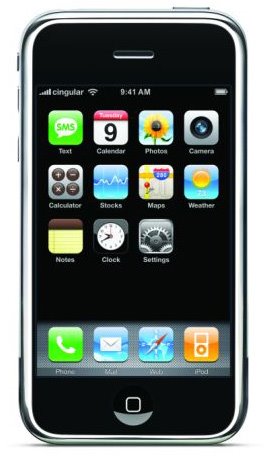
One device seems like it'll be the closest we'll ever get to the iPhone Nano: a smaller, less expensive iPhone. The iPhone Lite, as it's being called, is smaller and thinner than the existing iPhone and will come cheaper because it "relies on a so-called system on a chip, which incorporates many types of chips and drives down the cost of silicon in such devices."


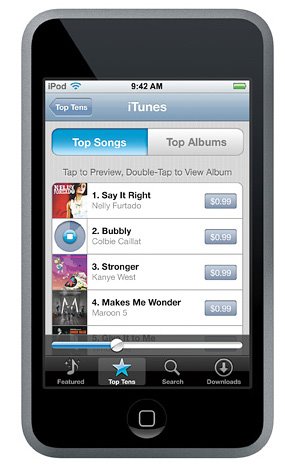
The other is a "media pad" that has the same functionality as an iPod Touch -- music, games, photos -- but with HD video and calling ability via a Wi-Fi connection. Sources tell Business Week that the device will be smaller than the Kindle 2, but with a larger touchscreen, paving the way for more speculation about Apple slinking into the eBook market. This might be the Apple Tablet everybody has been talking about.


Read rest of entry

Samsung Unveils That Its First Google Phone


Samsung Electronics became the first major mobile phone maker to launch a smartphone based on Google's Android software.


The South Korean company on Monday unveiled the I7500, which sports a 3.2-inch touchscreen, a 5-megapixel camera and 8GB of internal memory. It's 11.9 millimeters thick.

The I7500 will be available in major European countries starting from June, the company said.

The mobile phone joins two Android handsets already on the market from High Tech Computer (HTC) of Taiwan, the T-Mobile G1 and the HTC Magic. Android handsets from other makers have also been announced.


Specifications:


Network: HSDPA 7.2Mbps / HSUPA 5.76Mbps (900 / 1700/ 2100MHz), EDGE / GPRS (850/ 900/1800/1900)

OS: Android

Display: 3.2" HVGA(320×480) AMOLED

Camera: 5 MP Camera (Auto Focus), Power LED

Video: MPEG4, H.263, H.264, WMV

Audio: MP3, AAC, AAC+, e-AAC+, WMA, RA

Features: Full Web Browser Google Search, Maps, Gmail, YouTube, Calendar, Google Talk, Android Market

Connectivity: Bluetooth 2.0, USB 2.0, WiFi, MicroUSB, 3.5mm ear jack Internal memory: 8GB

External memory: Micro SD (Up to 32GB)

Battery: 1500 mAh

Size: 115 x 56 x 11.9mm


Read rest of entry

Microsoft planned to announce a new service "Windows Mobile 6.5 devices"


On Wednesday, Microsoft planned to announce a new service that will work on Windows Mobile 6.5 devices and will let people speak into the phone to search the Internet, make phone calls and dictate text messages. The technology comes from Tellme, a company that offers hosted voice recognition services and was acquired by Microsoft in 2007.

Key to the offering is a dedicated button that launches the service on the phone, said Marcello Typrin, director of product management for Tellme. To make it really easy to use, the service should be accessible from a single point, he said. That compares to the iPhone experience, where users must navigate to the apps page and open the Google Mobile App to use a similar voice-activated search service.

Key to the offering is a dedicated button that launches the service on the phone, said Marcello Typrin, director of product management for Tellme. To make it really easy to use, the service should be accessible from a single point, he said. That compares to the iPhone experience, where users must navigate to the apps page and open the Google Mobile App to use a similar voice-activated search service.

Windows Mobile customers can already use voice commands with Live Search, but the Tellme application adds the text and voice call features and pulls all three into a single, easily accessible service.

While customers may need to push fewer buttons to launch the service, they have to push buttons more often while using the service than do their iPhone-using counterparts. With the Tellme text application, for example, users hit the button before they start speaking their message and hit it again when they're done speaking. By contrast, the Google Mobile App automatically starts listening when the user moves the phone to the ear and then stops when the user is finished speaking.

In addition, the service should get other capabilities on an ongoing basis, Typrin said. For example, in the future a user might be able to say "play Rolling Stones" to play music from the music player.


Read rest of entry

Tuesday, April 21, 2009

Future cell phone to take on music editing


Monday plans to make an advanced music phone, hoping to tap untested demand for music editing on the go.


Pilotfish said its concept — which will reach the market a few years from now at the earliest —will enable good quality recording of three separate sound tracks and allow editing of the music by physically twisting and bending the phone.

The company, which has also designed scooters and blood pressure monitors, will initially target music enthusiasts and amateur musicians, but also sees wider appeal for the phone.

Analysts said the phone looked attractive but were skeptical about the potential demand in a market dominated by phone manufacturers like Nokia and Apple.

"In a fast moving market niche specifications and applications can rapidly become standard features. We've seen that with cameras, positioning and a host of other features," said Geoff Blaber from CCS Insight.

The phone's main touch-screen, which is similar to today's folder phones, consists of three 'sticks' that can be removed and separately clipped onto a musical instrument or a person to capture live sound.

"The technology should be available in 2-3 years," said Stefanel Barutcieff, senior industrial designer at Germany-based Pilotfish.

Pilotfish says broadening the features of music phones would benefit content creators, who could offer sound libraries or musical games for download. Operators, it says, would gain from increased traffic, and device manufacturers sell new models.


Read rest of entry

NASA’s moon missions face fuzzy future


At a spacecraft factory down the road from Kennedy Space Center in Florida, a small robotic probe is being prepared to fly to the moon. Its mission: map the lunar surface so NASA can find safe landing spots for astronauts.


But that may be the least of its worries.

A report issued last week by the Congressional Budget Office warns that the new manned space initiative, called Constellation, which is intended to follow the space shuttle and space station programs, is likely to cost about 50 percent more than advertised.

The analysis is based on NASA's track record. Of 72 past programs, budget overruns averaged 50 percent, the CBO found, including 14 projects that nearly doubled in cost.

"I think (CBO) got the trend and the big picture right," said Klaus Dannenberg, executive administrator with the American Institute of Aeronautics and Astronautics, a Washington-based trade organization. "But I wouldn't hang my hat on specific number because of the nature of the industry, the unknowns that we face and the surprises that come up."

NASA at least is starting off its Constellation program on stable financial ground. The bill for the Lunar Reconnaissance Orbiter, which is slated for launch June 2 aboard an unmanned Atlas 5 rocket, should come in at under $600 million — about 10 percent over budget due to a launch delay from 2008, but within a cap that includes a 25 percent cushion, said project manager Craig Tooley, with NASA's Goddard Space Flight Center in Greenbelt, Md.

"It was very important to us" to stay on budget, Tooley told Discovery News.

NASA plans to operate LRO for a year to draw up detailed maps of the moon's surface, then turn the probe over to its science department for a few years of follow-on investigations.

Of particular interest is whether there is frozen water in craters on the moon's poles. "That's the most intriguing question we'll answer," Tooley said.

NASA conducted a series of six lunar excursions between 1969 and 1972 under the Apollo program. The best images of the moon are still the photos that the astronauts shot during their visits, although those were limited to the lunar equatorial regions.


Read rest of entry

Wednesday, April 15, 2009

Three media veterans plan to introduce fees for online news


Three media veterans plan to bundle the Internet content of newspaper and magazine publishers into a subscription package that will test Web surfers' willingness to pay for material that has been given away for years.

The system won't be ready until the fall, but the plans were announced late Tuesday because so many publishers already are clamoring to sign up, said Steven Brill, co-chief executive of the new venture, called Journalism Online.

"The interest in this came together a lot more quickly than we anticipated," said Brill, the founder of Court TV and American Lawyer magazine. "We are dancing

more read...


Read rest of entry

Google has released next version of Android mobile operating system


Google


Google has released a developer preview of the next version of its Android mobile operating system.

The update introduces new application programming interfaces (APIs) along with other useful features, according to Google software engineer Xavier Ducrohet.

"Android 1.5 introduces APIs for features such as [on-screen] soft keyboards, home screen widgets, live folders and speech recognition," he said in a blog post.

Google's own applications on the platform, including Gmail, Google Talk, YouTube and Picasa, have all been tweaked and

more read...


Read rest of entry

World First Netbook with DVD-burning


Asus' new Eee PC 1004dn steps up in style and features, boasting a DVD-writer, expresscard slot and scrabble-tile keyboard.


Sometimes it seems like every week, there's a new Eee PC model to take a look at. That might sound like it gets dull after a while, but Asus keep innovating and giving us new things to get excited about.

Take the Eee PC 1004dn, for example. Somewhere along the way, scrabble-tile keyboards become the marker of class in laptops (I blame the Apple MacBook, though it certainly helps that Sony has followed suit with a swag of VAIO laptops), and here were have a scrabble-tile keyboard on an Eee PC.

Read rest of entry

Microsoft Office announced "Next version" coming in 2010


Microsoft Corp.'s next version of its Office desktop programs will reach consumers next year, though not likely in conjunction with the Windows 7 operating system.


Microsoft is set to announce Wednesday that Office 2010 will be finished and ready to send to manufacturers in the first half of next year.

From there, it can take six weeks to four months or more for the programs to reach PC users, said Chris Capossela, a senior vice president in the Microsoft group that makes Office. The timing will differ for big businesses and individual consumers, and for people who buy packaged software versus those who download it.


more read...


Read rest of entry

Friday, April 10, 2009

Scientists start to unlock secrets of bird flight


WASHINGTON – For millennia, people have watched the birds and bees and wondered: "How do they do that?"


Thanks to high-speed film and some persistent scientists, at least one of the secrets of flight is now revealed.

When birds, bats or bugs make a turn, all they have to do is start flapping their wings normally again and they straighten right out.

That came as a surprise to researchers who thought turning and stopping took more steps.

Lead researcher Tyson L. Hedrick of the University of North Carolina compared it to sitting at a desk chair and turning left. It's a three-step process, launch the turn by pushing with one foot, turn, then stop by pushing with the other.

It's a simpler, one-step process for flying animals, he explained in a telephone interview, launch a turn and then simply flap normally to end it and fly away.

The findings are reported in Friday's edition of the journal Science.

"We didn't expect things to fall out this neatly," he said, particularly since the process is the same for animals of all sizes from the fruit fly to the bat to the cockatoo.

"It's sort of unusual" to find a general rule to cover six orders of magnitude in size, he said.

The findings should help in the development of robotic flying machines, he said.

But, of course, this study focuses only on one type of maneuver, turning left or right, which is known as yaw in aviation.

There's still pitch, nose up or nose down, and roll, which is tilting left or right, to be dealt with.

"We picked basically the simplest turn you can imagine to make comparison," Hedrick said.


The situation does become more complicated with more complex maneuvers, "and that is clearly the next step," he said.


The report was welcomed by Bret W. Tobalske of the University of Montana, who said "the results will inform all future research into maneuvering flight in animals and biomimetic flying robots."

"Now that technology has developed to the point where detailed measurements of flapping maneuvers have become feasible, a world of comparative research is opening," Tobalske, who was not part of the research team, said in a commentary on the paper.

The research was funded by the National Science Foundation.


Read rest of entry

YouTube, Universal Music Group form music venture


YouTube and Universal Music Group are teaming up on an online music video venture that will launch later this year with Universal's entire catalog of nearly 10,000 music videos.


The companies will share ad revenue on the Vevo.com site, on a Vevo channel on YouTube and on a tailor-made video player that can be placed on social-networking pages and other sites. The free-to-view package will carry ads, including video spots of up to 15 seconds preceding the music video.

"We believe that video is the best opportunity for revenue generation right now," said Rio Caraeff, executive vice president of Universal's eLabs digital business strategy unit.

"The advertisers and brands are more comfortable with video as a vessel for their message and their advertising spend. Streaming audio is harder to monetize under an ad-driven model right now."

As an added incentive to Universal, the player will feature a button enabling users to easily buy the tunes digitally through Apple Inc.'s iTunes and Amazon.com Inc., which send most of the revenue from music sales to the labels. For now, videos will not be for sale.

Universal will spend tens of millions of dollars on the project and Vevo will be a wholly owned Universal subsidiary, Caraeff said. YouTube, a subsidiary of online advertising and search leader Google Inc., will provide the technology.

Universal, a unit of France's Vivendi SA, is the world's largest recording company and already has the most watched channel on YouTube with some 3.8 billion views since August 2006.

Doug Morris, Universal's chief executive, is in talks with the other major recording labels — Warner Music Group Corp., Sony Music Entertainment and EMI Group Ltd. — about participating in the venture.

David Eun, Google's vice president of strategic partnerships, said that previously, YouTube's relationship with major content creators like recording labels has been "fraught with tension and animosity and sometimes lawsuits."

"There hasn't been a genuine partnership that I think this model represents," he said.

In December, Warner Music pulled all of its music from YouTube, saying the payments it received did not fairly compensate the label or its artists and songwriters.

Even Neil Young jumped into the fray, arguing on his Web site that YouTube had underpaid Warner compared with other labels, resulting in a shutdown that "penalized" artists like himself.

Viacom Inc. is also suing YouTube for $1 billion, saying the site infringes on copyrights of its shows, including Comedy Central's "The Daily Show with Jon Stewart" and Nickelodeon's "SpongeBob SquarePants" cartoon.

YouTube will continue to host and generate ad revenue off user-generated content, including recorded music accompanied by minimal original video, but those items won't be hosted on Vevo unless they stand out in some way, Caraeff said.

Vevo will also create other music video programming to give the service personality and edge, much like video disc jockeys, or VJs, have done on MTV, Caraeff said.

"It has to have soul," he said. "I'm not going to say we'll have VJs, but it will have a particular voice."


Read rest of entry

US wages war on bugs afflicting troops abroad


Fluorescent rodent feces, a promising new mosquito repellant and a better flytrap are all part of a war on bugs designed to protect U.S. troops around the world.


Researchers in the Pentagon's Deployed Warfighter Protection Research Program highlighted pest-fighting innovations this week at the American Mosquito Control Association convention attended by some 800 scientists and insect control experts. Their aim: to take no prisoners among disease-carrying flies, mosquitoes and other bugs that threaten Americans in uniform abroad.

Even the common fly is counted among the enemy.

"When you're deployed, I would say 90 percent of all soldiers, service members, are going to have issues with filth flies," said Army Lt. Col. Jason Pike, executive officer of the 65th Medical Brigade's Force Health Protection and Preventive Medicine program headquartered in South Korea.

"Filth flies carry many organisms which cause diarrhea ... It might not be fatal, but one soldier out of commission affects a lot of other people," he said.

Begun in 2004, the Deployed Warfighter Protection Research Program dispenses $5 million a year to find new ways to combat disease-carrying insects that threaten the troops — applications that ultimately could protect the public at large.

Military-driven research has produced past innovations against malaria and dengue and helped develop DEET, a key ingredient in most modern repellants. It even has led to chemical-treated fabrics that ward off ticks and mosquitoes.

Fighting bugs is a "global perpetual need," said program coordinator Graham B. White of the Armed Forces Pest Management Board. "Even if nobody went to war for a long time, these things would still need to be developed."

He said small insecticide sprayers developed through the program are now in use. The program also backed testing that secured recent Environmental Protection Agency approval of an insecticide spray that is highly toxic at low doses to adult mosquitoes but safe for mammals.

Now Navy Corpsman Joe Diclaro II is taking aim at the housefly. "I like to think of it as a death device," Diclaro said of a fold-up flytrap designed to ship flat and be rolled into bug-catching tubes in the field.

For starters, he changed the color of the trap.

"Almost everything on the market is yellow," said Diclaro, who is working on a doctorate in medical entomology at the University of Florida in conjunction with the Agriculture Department's Mosquito and Fly Research Unit.

When Diclaro released house flies in a dark tunnel between boxes lit in different colors, he found flies prefer blue or white over yellow.

So his trap is made of blue signboard. Tests show it has killed about 3,000 flies in 24 hours. Diclaro said his university's technology office has applied for a patent.

The research is among nearly three dozen studies funded by the Pentagon program since 2004.

Stephen Duke, of the National Center for Natural Products Research in Oxford, Miss., described possible bug repellents derived from American beautyberry, a shrub common to the Gulf coast. Duke said work began after a botanist remarked that relatives had rubbed farm mules with beautyberry leaves for bug protection.

Two colorless, odorless compounds in the leaves — callicarpenal and intermedeol — seem about as good as DEET against mosquitoes and repel black-leg ticks and fire ants, Duke said. He said a decision on possible commercial uses is still a few years away.

The fluorescent feces are being used at Louisiana State University to learn whether sandflies can be killed by feeding sand rats a chemical harmless to the rodents but lethal to larvae that eat their feces.

Leishmaniasis, which causes disfiguring open sores and is spread by sandfly bites, is an enormous concern in the Middle East, White said. The disease infects an estimated 2 million people a year, according to the World Health Organization.

More than 2,000 U.S. troops in Iraq and Afghanistan have suffered from the disease, said Kenneth Linthicum, director of the Agriculture Department's Center for Medical, Agricultural and Veterinary Entomology.

To show that something eaten by a rodent could affect a sandfly, LSU researchers fed hamsters a dye that glows hot pink under fluorescent light. Sandfly larvae that ate the rodents' feces glowed, too.

They then fed hamsters two different chemicals known to kill sandfly larvae. Larvae ate their feces and died.

The fluorescent bait is being tested in Kenya and more work is planned on it, said researcher Thomas Mascari, a postdoctoral student in entomology at the LSU AgCenter.

"In 2010, we'll be going to Egypt to work with the Navy," he said.


Read rest of entry

Science Today: Edge of Space Found


Hold on to your hats, or in this case, your helmets: Scientists have finally pinpointed the so-called edge of space — the boundary between Earth's atmosphere and outer space.


With data from a new instrument developed by scientists at the University of Calgary, scientists confirmed that space begins 73 miles (118 kilometers) above Earth's surface.

A lot remains very fuzzy, however, as the boundary is surrounded by a host of misconceptions and confusing, conflicting definitions.

For starters, astronauts can say they've been to space after only passing the 50-mile (80-kilometer) mark.

Meanwhile the boundary recognized by many in the space industry is also a somewhat arbitrary 62 miles (100 kilometers). Scientist Theodore von Kármán long ago calculated that at this altitude the atmosphere is so thin that it's negligible, and conventional aircraft can no longer function because they can't go fast enough to get any kind of aerodynamic lift. This 62-mile boundary is accepted by the Federation Aeronautique Internationale (FAI), which sets aeronautical standards.

The United States, however, has never officially adopted a set boundary standard because it would complicate the issue of overflight rights of satellites and other orbiting bodies, according to NASA.

NASA's mission control uses 76 miles (122 kilometers) as their re-entry altitude because that's where the shuttle switches from steering with thrusters to maneuvering with air surfaces, NASA states. Others point out that the "Now Entering Space" sign should be posted way out at 13 million miles (21 million kilometers) because that's the boundary where Earth's gravity is no longer dominant.

(While astronauts experience weightlessness in space, this isn't because there's no gravity there, it's due to the balance of forces acting on them as they orbit.)

In the new study, an instrument called the Supra-Thermal Ion Imager detected the boundary by tracking the relatively gentle winds of Earth's atmosphere and the more violent flows of charged particles in space, which can reach speeds well over 600 mph (1,000 kph).

The ability to gather data in that area is significant because it's very difficult to make measurements in this region, which is too high for balloons and too low for satellites.

"It's only the second time that direct measurements of charged particle flows have been made in this region, and the first time all the ingredients – such as the upper atmospheric winds – have been included," says project scientist David Knudsen of the University of Calgary.

The instrument was carried by the JOULE-II rocket on Jan. 19, 2007. It traveled to an altitude of about 124 miles (200 kilometers) above sea level and collected data for the five minutes it was moving through the "edge of space."

The finding, detailed in the Journal of Geophysical Research on April 7, could aid the study of space weather and its impacts on Earth.

The data "allows us to calculate energy flows into the Earth's atmosphere that ultimately may be able to help us understand the interaction between space and our environment," Knudsen said.
"That could mean a greater understanding of the link between sunspots and the warming and cooling of the Earth's climate as well as how space weather impacts satellites, communications, navigation, and power systems."


Read rest of entry
  • Recent Posts


Followers

My Blog List

Followers

Recommended Gadget

  • ads
  • ads
  • ads
  • ads

Latest Technology News Copyright © 2009 Gadget Blog is Designed by Ipietoon Sponsored by Online Business Journal